

- A $50/day budget is realistic in Central/Eastern Europe, the Balkans, and Portugal, but not in Western European capitals.
- Krakow, Budapest, and Bucharest currently run around $50-55/day for a backpacker itinerary.
- Accommodation is the single biggest lever for controlling daily spend.
- The cost gap between cheap and expensive Europe has widened heading into 2026.
Is $50 a Day Really Enough to Travel Europe in 2026?
Yes — but only if you travel through Central and Eastern Europe, the Balkans, or Portugal, where a full day of hostel, food, transit, and one paid attraction realistically lands between $40 and $55. Western European capitals like Paris, Amsterdam, or Zurich will blow past that number before lunch. The $50/day budget isn’t a marketing gimmick — it’s a real, achievable ceiling if you pick your countries strategically and treat accommodation as your biggest lever.
The good news for 2026 is that the gap between “cheap” and “expensive” Europe has actually widened. Recent cost-index data shows Krakow running around $52/day for a backpacker itinerary, while Budapest and Bucharest sit in a similar range. Meanwhile, Western capitals and even some Southern European hotspots have crept upward as post-pandemic tourism demand normalized into permanently higher price floors.
This guide breaks down exactly where $50 stretches and where it snaps, with a real cost table sourced from current hostel platforms, transit operators, and eSIM providers, plus a decision framework so you’re not guessing your way through a shoestring trip. We’re not promising luxury — we’re promising a trip that doesn’t require you to skip meals or sleep in train stations.
What Actually Drives Your Daily Cost in Europe
Four categories determine almost your entire daily spend: accommodation, food, local transport, and connectivity — and accommodation alone typically eats 35-45% of a budget traveler’s day. Understanding which of these you can compress (and which you can’t) is the difference between a $45/day trip and a $95/day trip covering the same ground.
Accommodation takes the largest bite of any travel budget, typically 35-45% of daily spending, with food coming next, then activities and transport. This means your hostel choice isn’t a minor detail — it’s the single biggest number you control. A hostel dorm at $15 per night versus a hotel at $90 per night isn’t just a comfort difference; it reshapes what the entire trip costs.
Geography is the second-biggest lever, and it’s more powerful than most travelers assume. The most powerful budget lever in European travel isn’t finding the cheapest hostel or the least expensive restaurant — it’s geographic strategy, since a three-week trip split between one week in Western Europe and two weeks in Eastern or Southern Europe costs roughly the same as two weeks spent entirely in the west. That single decision — where you point your itinerary — matters more than any individual discount code or loyalty program.
Season is the third variable, and it swings prices harder in Eastern Europe than people expect. High season from June through August inflates accommodation prices by 30-50% across the board, while shoulder season (April-May and September-October) delivers the best combination of reasonable prices, decent weather, and manageable crowds. If your dates are flexible, shifting a trip by even three weeks out of peak summer can single-handedly rescue a $50/day budget that would otherwise fail.

2026 Daily Cost Breakdown: What $50 Actually Buys You
A realistic $50/day budget in Central/Eastern Europe covers a hostel dorm ($15-22), two meals mixing street food and self-catering ($12-20), local transit ($2-5), and one modest paid activity or drink ($5-10) — with an eSIM data plan amortized at roughly $1-3/day. Here’s the verified breakdown across the cities where this budget genuinely works.
| Cost Item | Krakow, Poland | Budapest, Hungary | Bucharest, Romania |
|---|---|---|---|
| Hostel dorm bed/night | ~$17 (€16) | ~$15 (€14) | ~$19 (€17) |
| Full day of food (street food/self-catered) | ~$27 (€25) | $10-18 (street lunch + dinner) | ~$31 (€29) |
| Local transport (single fare) | ~€1-2 | 24-hr pass ~$8.90 | ~€1-2 |
| Local beer/casual drink | €2.50-€3 | $4-5 (ruin bar) | €2-3 |
| Approx. total daily budget | ~$52 (€48) | ~$35-65 | ~$80 (€74) |
How we calculated: dorm and food figures verified via the 2026 Backpacker Cost Index cited by CityVoyagerHub and Budget Your Trip’s Krakow hostel data (based on 38 hostels); Budapest transit/food figures cross-checked against RadicalStorage’s 2026 Budapest cost guide. Verified July 2026.
Two things stand out. First, the average price for a dorm bed in a hostel in Krakow, based on data from 38 hostels with dorms, is an affordable $17 — cheap enough that it barely dents a $50 daily allowance. Second, Bucharest’s $80/day figure shows that “Eastern Europe” isn’t automatically synonymous with “under $50” — Brokepackr puts Bucharest at about $80/day (~€74), with a dorm around €17 and food around €29, meaning it actually runs above the Krakow and Budapest benchmarks despite Romania’s low overall price level.
Which Country Actually Fits a $50 Budget in 2026?
Poland, Hungary, and parts of the Western Balkans are the most reliable $50/day countries in 2026, while Czech Republic sits right at the edge and Western Europe requires nearly double that budget. Knowing which side of the line a destination falls on before you book flights saves you from a mid-trip budget crisis.
The Reliable Under-$50 Zone
Poland runs $35-55 per day on a budget, with excellent food, clean hostels, and efficient public transport, and Krakow and Warsaw both offer remarkable value even in peak season. Hungary performs almost identically — Hungary sits alongside Poland as one of Europe’s best value destinations, with Budapest at $35-55 per day offering thermal baths, stunning architecture, and a food scene that would cost three times as much in Paris. These two countries are the safest bet for a first-time $50/day itinerary because the range genuinely centers under the target rather than skimming its upper edge.
The Borderline Zone: Prague and the Baltics
The Czech Republic comes in slightly higher at $45-65 per day, mostly because Prague’s popularity has pushed accommodation prices up, though stepping outside Prague to cities like Brno or Cesky Krumlov drops prices further. This is the pattern worth remembering: it’s rarely the country that breaks your budget, it’s the single overexposed capital city inside it. Swap two nights in central Prague for a night in Brno and your average day snaps back under $50 fast.
The Baltic capitals show a similar tension. Tallinn’s hostel scene is genuinely cheap, but Tallinn is the cheapest of the Baltic capitals on a dorm basis at roughly $16/€15 per night, though euro-zone food prices push the daily total to about $79 (€73). The lesson: a low hostel rate alone doesn’t guarantee a $50 day if the surrounding food and transit economy runs on Western European price levels.
Where $50/Day Simply Doesn’t Work
Western European capitals are off the table for this budget without serious compromises like camping or long-term house-sitting arrangements. Paris, Amsterdam, Zurich, and London hostel dorms alone frequently exceed $30-40/night before you’ve eaten a single meal, and public transit day passes, museum entry, and casual dining routinely add another $30-40 on top. If your itinerary must include these cities, the realistic strategy is to average them against several much cheaper days elsewhere on the same trip, rather than trying to force each city individually under $50.
Scenario Table: Matching Traveler Type to a Daily Budget
Your travel style — not just your destination — determines whether $50/day feels comfortable or punishingly tight, so match your itinerary to one of these three realistic profiles.
| Traveler Type | Daily Budget | The Math |
|---|---|---|
| Shoestring solo backpacker | $28-38/day | Dorm $15 + self-catered food $8-10 + transit $2 + free walking tours/attractions + eSIM amortized ~$2 |
| Standard budget traveler (mixed eating out/cooking) | $45-55/day | Dorm $17-20 + mixed meals $18-25 + transit pass $5-9 + one paid attraction $10-15 |
| Comfort-seeker (private room, restaurants) | $70-110/day | Private room in hostel or budget hotel $60-110, café breakfast $8, mid-range lunch/dinner $18-40, 72-hour transit card $18.60, mix of paid attractions $20-35/day |
How we calculated: shoestring and standard tiers built from Krakow/Budapest dorm and food data above; comfort tier sourced from RadicalStorage’s Budapest 2026 mid-range cost breakdown. Verified July 2026.
Booking Transport Without Wrecking the Budget
For a $50/day trip, budget buses like FlixBus and BlaBlaCar almost always beat rail passes on cost, and a Eurail/Interrail pass only pays off if you’re crossing four or more countries with long, expensive routes. Getting this decision wrong is one of the fastest ways to torch an otherwise disciplined budget.
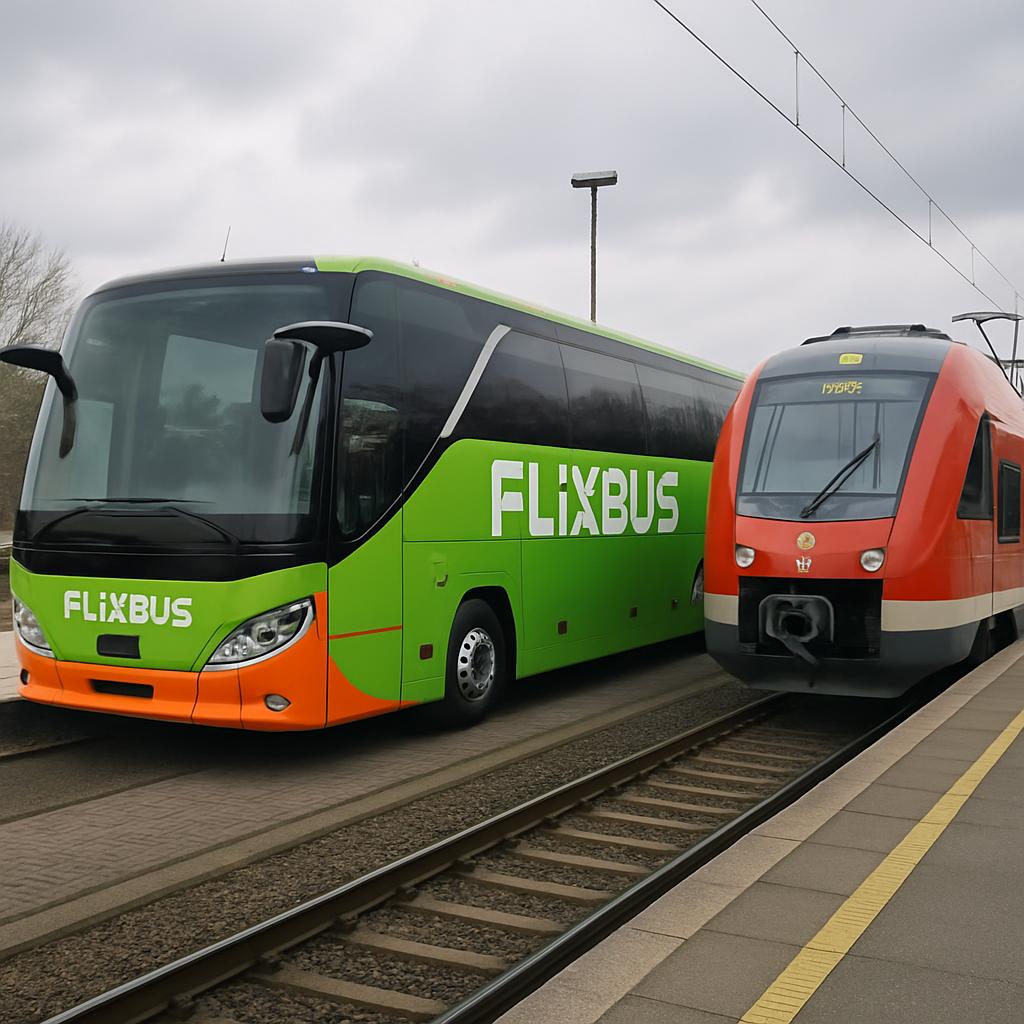
FlixBus remains the backbone of intercity budget travel across the continent. Typical prices run around €19 for Berlin–Prague, €25 for London–Paris, and €12 for Warsaw–Kraków, and booking in advance can save 50-70% over buying on the day. The catch is that these are promotional lows, not guaranteed fares — overnight coaches on longer corridors like Munich–Milan or Paris–Barcelona typically run €25-€50 and can save you a full night’s accommodation by combining transport and sleep into one line item.
Rail passes are a better fit for a different kind of trip. 2026 adult second-class Eurail Global Pass prices run roughly: 4 days in 1 month €293, 7 days in 1 month €396, and 15 days continuous €487, and for travelers crossing four or more countries, riding overnight trains, or wanting the freedom to change plans the night before, a 7- or 10-day Flexi Pass is usually cheaper than equivalent walk-up tickets. But if your trip is a tight 3-4 city loop booked well in advance, individual bus and advance train tickets will almost always undercut a pass. One detailed breakdown found that a 4-day Flexi Pass plus reservation fees for a Paris-Amsterdam-Brussels-Paris loop cost roughly double what booking each leg directly would have cost — the pass lost.
Don’t forget connectivity as its own line item. Current comparisons put Airalo’s Europe eSIM at roughly €24 for 7 days unlimited across 42 countries, Nomad around €18.96 for 10GB, and Holafly around €26.90 for unlimited data, and Nomad tends to win on pure per-GB cost at volume while Saily is the value pick for light-to-medium users at $4.99 for 1GB. Spread across a two-week trip, a $20-25 eSIM plan amortizes to roughly $1.50-2/day — a rounding error next to accommodation, but worth choosing correctly since running out of data mid-trip and buying a local SIM at a kiosk usually costs more.
A Practical Checklist for Locking In a $50/Day Trip
Following a fixed sequence — destination, season, accommodation, transport, connectivity, daily cash rules — turns a vague budget goal into an itinerary you can actually execute. Work through these steps roughly in order before you book anything.
- Pick 2-4 countries from the reliable zone. Anchor the trip in Poland, Hungary, and/or the Western Balkans rather than mixing in a Western European capital unless you can average it against several much cheaper days.
- Travel in shoulder season if your dates are flexible. April-May or September-October avoids the 30-50% summer price spike on accommodation without sacrificing much weather quality.
- Book hostel dorms, not private rooms, and check reviews before price. A $17-20 dorm bed in a well-reviewed hostel with a kitchen cuts your food costs too, since self-catering breakfast and one meal a day is realistic almost everywhere.
- Compare bus vs. rail pass math before buying anything. If your itinerary has fewer than four long-distance legs, price out individual FlixBus or advance train tickets first — a pass is very likely to lose that comparison.
- Buy your eSIM before departure, not at the airport. A regional Europe plan in the $20-25 range for a week or two of data is cheaper and less stressful than hunting for a local SIM kiosk on arrival.
- Set a hard daily cash ceiling and track it. Use a simple notes app or budgeting app to log spend each evening — the discipline matters more than the specific tool.
- Build in one “buffer day” per week at $0-10 spend. A day of free walking tours, parks, and cooked-at-hostel meals offsets an inevitable higher-spend day elsewhere without breaking the weekly average.
Where to Book: A Few Tools Worth Using
None of this budget math works without the right booking platforms, and a few stand out enough to mention directly. For hostels, comparing across Hostelworld, Booking.com, and Hostelz before locking in a dorm bed is worth the extra ten minutes, since prices for the same bed can vary by several dollars between platforms. For transport, Omio and Busbud both aggregate FlixBus alongside competing operators like BlaBlaCar Bus and ALSA, which matters because the cheapest seat on a given route isn’t always FlixBus’s own listing.
For connectivity, Airalo’s Eurolink plan is the safest default if you’re crossing borders frequently, since its 42-country coverage is the widest of the major regional plans, while Saily or Nomad are worth checking first if you’re a lighter data user prioritizing pure cost per gigabyte. None of these are sponsored picks — they’re simply the platforms that consistently surface the lowest verified prices in the categories that matter most for a $50/day trip.
Frequently Asked Questions
Book Unforgettable Tours & Experiences
Skip the tourist traps. GetYourGuide connects you with top-rated local guides and hand-picked activities — with free cancellation on most bookings.
The Bottom Line: Matching Your Budget to the Right Map
If your daily ceiling is a hard $50, build your trip around Poland, Hungary, and the Western Balkans in shoulder season — if it’s closer to $70-80, Czech Republic, the Baltics, and Portugal open up too. The number itself matters less than matching it honestly to a region where the math already works before you add in personal splurges.
For readers with genuinely $40-50/day to spend, the decision map is simple: fly into Krakow or Budapest, use FlixBus or regional trains for city-to-city hops under four legs, stay in reviewed hostel dorms, self-cater breakfast and one meal daily, and reserve cash for one paid attraction every day or two. This is not a deprivation itinerary — thermal baths, medieval old towns, and some of Europe’s best-reviewed hostel social scenes are all inside this budget, not outside it.
If your trip absolutely must include Western European capitals, the honest move is to treat $50/day as your average across the whole trip rather than a per-city target — spend $90-100 in Paris or Amsterdam and offset it with $30-35 days in Krakow or Bucharest later in the itinerary. Either way, the biggest single decision remains geographic: pick the region first, and the rest of the budget tends to fall into place behind it.
Disclosure: This post contains affiliate links. We may earn a commission at no extra cost to you.