

- A comfortable single-person setup in Chiang Mai costs $1,800–$2,500/month in 2026, including private housing, coworking, meals out, and transport.
- A lean barebones budget of around $1,000/month is achievable but requires shared housing and eating almost exclusively street food.
- Chiang Mai remains one of Southeast Asia’s top nomad hubs in 2026, though its reputation as ‘absurdly cheap’ needs realistic qualification.
- The honest middle-ground budget accounts for private apartments and coworking access, not just rock-bottom survival scenarios.
Introduction: Chiang Mai’s 2026 Numbers, Without the Hype
If you want a realistic 2026 picture, plan to spend roughly $1,000 on the lean end and $1,800–$2,500 per month for a comfortable single-person setup in Chiang Mai, including a private apartment, coworking, meals out, and transport. That range is the honest middle ground that survives the city’s reputation for being “absurdly cheap.” A single remote worker can live comfortably in Chiang Mai for about $1,800 to $2,500 USD per month, including a private apartment, coworking access, regular meals out, and everyday transportation. The barebones version is real too — but it requires shared housing and street food almost exclusively.
Chiang Mai earned its reputation as the original Southeast Asian nomad hub for good reason, and that hasn’t faded in 2026. Chiang Mai has been one of the world’s most established digital nomad hubs for more than a decade, with reliable internet, an active remote-work community, and a relatively low cost of living that continue to make it one of the easiest places to base yourself while working online. What has changed is the precision required: inflation, a new five-year visa, and a worsening burning season mean you need current numbers, not 2018 blog folklore.
This guide is built entirely from 2026 rental listings, government visa rules, and air-quality data — not memory. The goal is to give you a budget you can actually defend, a neighborhood you can actually afford, and a calendar that keeps you out of the worst smoke. Treat every figure here as an approximate range that shifts with exchange rates, season, and lifestyle, and always verify live prices before you commit to a lease or a flight.

What should you budget for as a digital nomad in Chiang Mai?
Budget for five core buckets: housing, food, transport, coworking/internet, and a visa/insurance reserve. For a single person in 2026, a comfortable all-in monthly total lands around $1,200–$1,800, while a frugal setup can dip toward $900–$1,000. $1,000/month comfortably covers rent ($350-$400), food ($200-$250), transport ($30-$50), and leisure/coworking ($150-$200) in Chiang Mai. The trick is knowing which categories are genuinely cheap and which quietly inflate when you import a Western lifestyle.
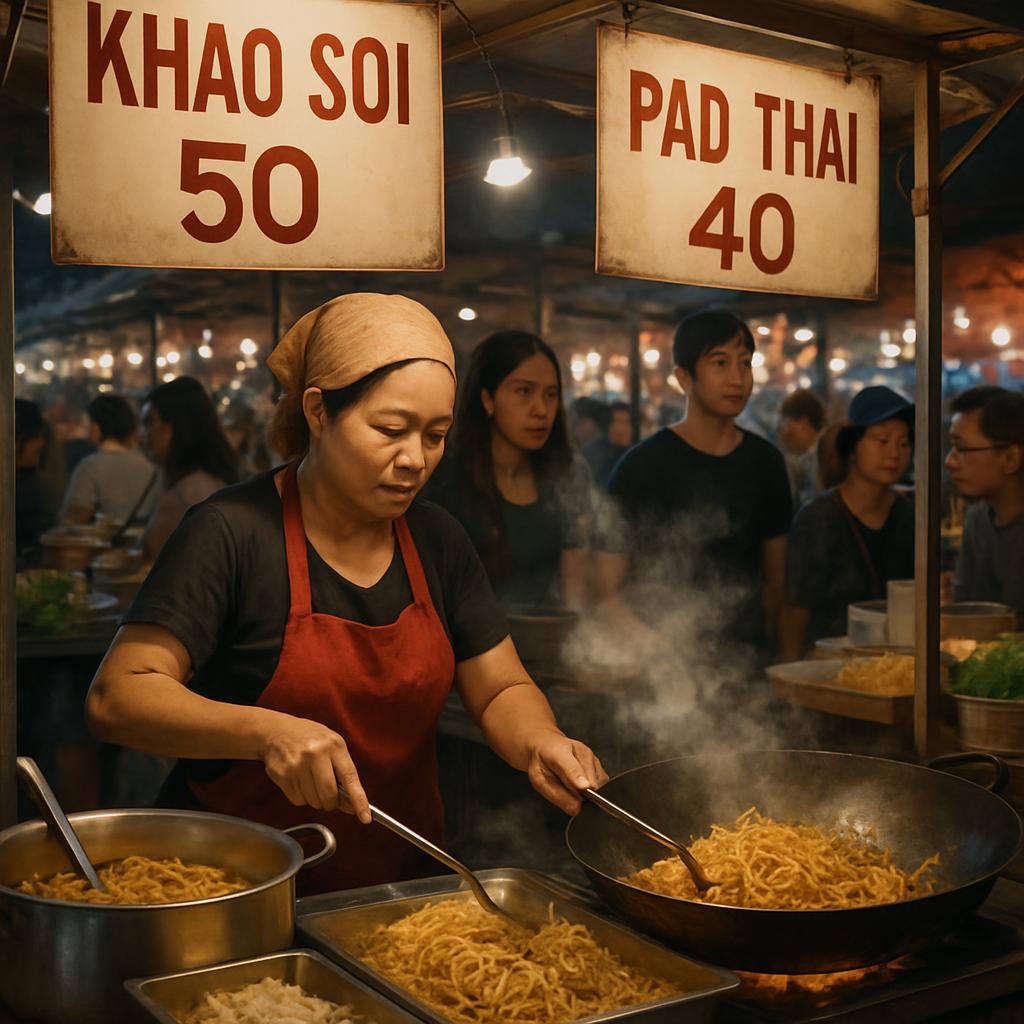
Housing is your anchor and your biggest lever. Nimman, Chiang Mai’s expat epicenter, offers furnished 1-bedroom condos for $350-$600/month with modern amenities, gym, and pool, while the Old City and Suthep areas are quieter and slightly cheaper at $300-$500, and residential outskirts near Maya Mall or Huay Kaew drop to $200-$350 for spacious units. Food has the widest swing of any category. Groceries run $150-$200 and dining $2-$8 versus $5-$15 in Bangkok — meaning your daily choice between a street-food khao soi and an imported brunch is the single biggest variable in your budget.
Internet and connectivity are where Chiang Mai punches far above its price. High-speed fiber internet of 200-500 Mbps costs approximately 550-600 baht ($15-$17) monthly from providers including 3BB, Truemove, AIS, and TOT. Add a coworking membership, a mobile data SIM as backup, and a small reserve for your visa extension and travel insurance, and your fixed monthly costs are remarkably predictable. The categories that blow budgets are almost always discretionary: Western dining, frequent weekend travel, nightlife, and gym/fitness memberships beyond your building’s basic facilities.
How much do the essentials actually cost per month?
Here’s a realistic mid-range monthly breakdown for one person in 2026. Rent for a furnished one-bedroom condo: $350–$500. Food blending mostly local with some Western meals: $250–$400. Transport with a rented scooter: scooter rental and fuel run approximately 90 euros per month for the rental and gasoline (roughly $95–$100). Home fiber internet: $15–$17. Coworking hot-desk: $72–$150. Utilities and water vary by AC usage but stay modest year-round. That stacks to roughly $850–$1,250 before discretionary spending — leaving headroom for travel, insurance, and fun within the $1,200–$1,800 comfortable band.
What pushes a budget from $1,000 to $2,500?
The jump comes from four upgrades: a nicer condo near Nimman with a pool and gym, daily Western or air-conditioned dining, frequent weekend trips to Pai or the islands, and premium coworking. A more comfortable expat lifestyle — with a better apartment, frequent dining out, and weekend travel — can reach around $3,000 per month. None of these are necessary; they’re choices. If you anchor housing under $500 and eat local four days out of five, hitting $1,200 is entirely realistic even in 2026.
Which Chiang Mai neighborhood is best for remote workers?
For most first-time nomads, Nimman (Nimmanhaemin) is the best landing zone for its cafés, coworking, and walkable density — but Santitham and the Old City offer better value once you know the city. Nimman is the social and work core, and you pay a premium for it. The best area is Nimman, but it’s also the most expensive. It’s the right call for your first month while you find your footing.
The Old City, ringed by its historic moat, is the cultural alternative — quieter at night and cheaper on rent. Inside the moat, surrounded by 700-year-old temple walls, it’s more traditional, quieter at night, with cheaper rent and studios around ฿5,000–10,000/month ($145–290). Many long-stay nomads migrate north after their first month. North of the Old City, Santitham is where Chiang Mai nomads move after their first month on Nimman — cheaper, quieter, more local restaurants, but still a 10-minute bike ride to everything. If authenticity and savings matter more than nomad density, Santitham is the value sweet spot.
Whatever you choose, verify the actual rent against live listings rather than averages. As a benchmark, condo rents in the Mueang Chiang Mai district average around USD368 for a studio, USD429 for a 1 bedroom, USD768 for 2 bedrooms and USD1,382 for 3 bedrooms. Specific Nimman buildings illustrate the spread: at The Nimmana, rental units have listed from USD389 to USD1,498 per month. One practical caveat on leases: deposits are typically two months’ rent, prices can sometimes be negotiated for six-month or year-long agreements, and while sites like RentHub or FazWaz are useful starting points, many of the best options are still found by walking into buildings and asking about available units.
What do real-world costs, internet, and reviews show in 2026?
Real-world data confirms Chiang Mai remains a top-value base, but it’s no longer the cheapest option in the region. Chiang Mai isn’t the cheapest nomad base anymore — Vietnam and Georgia undercut it significantly — but it’s the most complete, the one where internet, community, food, cost, and lifestyle all align at once. That “complete package” framing is the most honest 2026 summary you’ll find. You’re paying a small premium over rivals for infrastructure and community depth.
On connectivity, the consensus is strongly positive. Condo and café fiber commonly runs 300–500 Mbps, and coworking spaces guarantee reliable speeds for video calls. For comparison shopping, Punspace-style professional coworking runs around ฿200/day ($5.75) or ฿3,500/month ($100) with 100+ Mbps WiFi, while smaller community spaces sit around ฿150/day ($4.30) or ฿2,500/month ($72) with 80+ Mbps. The time zone also suits a global client base: GMT+7 works for overlap with European mornings and US West Coast evenings.
Reviews also surface the genuine downsides, and you should weigh them honestly. Long-term residents repeatedly flag two issues: walkability and air quality. Infrastructure can be frustrating — it’s not a walkable city, which is a shame since the Nimman area could have been a walking street, but cars and scooters dominate. The community, however, remains a standout draw. Unlike Bali where the nomad scene can feel performative, Chiang Mai’s is built on people who actually live and work here — developers, writers, designers, traders, and freelancers who chose this city for practical reasons. For a sustainable long-stay base rather than a short adventure, that mix is hard to beat.
How do Chiang Mai budget tiers and visa options compare?
The table below compares three realistic monthly budget tiers for a single nomad, followed by the visa math that underpins a long stay. Use the budget tiers to set expectations and the visa comparison to decide how you’ll legally stay past a tourist stamp. All figures are approximate 2026 ranges in USD and should be re-checked against live listings and the official Thai e-Visa portal before you commit.
| Category | Lean ($900–$1,100) | Comfortable ($1,200–$1,800) | Premium ($2,000–$2,800) |
|---|---|---|---|
| Housing | Studio/shared, Santitham or outskirts ($200–$350) | Furnished 1-BR condo, Nimman/Old City ($350–$500) | Premium Nimman condo, pool/gym ($600–$900) |
| Food | Mostly street food ($150–$200) | Mix of local + Western ($250–$400) | Western dining + imports ($450–$650) |
| Transport | Songthaew + walking ($20–$40) | Scooter rental + fuel (~$95) | Grab/Bolt + scooter ($120–$180) |
| Coworking + Internet | Café work + home fiber ($15–$90) | Hot-desk membership ($72–$100) | Premium coworking ($100–$150) |
| Visa + Insurance reserve | Tourist stamp + basic insurance | DTV amortized + insurance (~$42+/mo) | DTV + comprehensive insurance |
| Visa Option | Stay Length | Cost | Key Requirement |
|---|---|---|---|
| DTV (Destination Thailand Visa) | 180 days/entry, extendable +180; 5-yr multiple entry | 10,000 THB (~$275–$290); 1,900 THB extension | 500,000 THB savings held 3+ months |
| 60-day Tourist Visa | 60 days + 30-day extension | Varies by consulate | Apply at consulate in advance |
| Visa-exempt entry | 30 days, extendable +30 | Free on arrival (many nationalities) | Passport valid 6+ months |
| Education Visa | Long-term (course-dependent) | Course fees + visa fees | Enroll in approved program (e.g., Thai language) |
The DTV is the headline 2026 option for serious remote workers. The Destination Thailand Visa (DTV) is a 5-year multiple-entry visa for digital nomads, remote workers, and those pursuing Thai soft-power activities. Crucially, it requires at least 500,000 THB held in a savings account for at least 3 months, accepts a 3-6 month bank statement as evidence, does not accept cryptocurrency, and carries a visa fee of 10,000 THB (typically equivalent to 400 to 500 USD depending on the embassy). Note one strict 2026 detail: embassies now require the 500,000 THB balance be held for at least 90 consecutive days prior to application — simply “parking” the money for a day no longer works.
How do you choose the right setup and avoid common mistakes?
Choose your setup by sequencing three decisions in order: timing (avoid burning season), visa (match it to your stay length and savings), then housing (start short, then commit). Get the calendar right first, because the single biggest mistake nomads make in Chiang Mai is arriving during the smoke. Burning season runs roughly from February through April, with the worst usually concentrated in late February and March, though some years it drags into April — and by Songkran in mid-April it’s almost always cleared up.
The air-quality risk is not minor. Chiang Mai’s average PM2.5 concentration in 2024 was 26.4 µg/m³, corresponding to a “moderate” AQI of 81 and 5.2 times the WHO annual guideline of 5 µg/m³ — and that’s the annual average; peak days are far worse. In 2026, on March 30, IQAir’s rankings placed Chiang Mai at number one globally with an AQI of 233, a level the US AQI standard classifies as Very Unhealthy for all population groups. The practical fix is simple: time your stay for roughly November through February for the best weather, and if your dates are fixed in spring, plan an island escape and book refundable northern stays. This is health-adjacent guidance, not medical advice — if you have asthma, COPD, or heart conditions, consult a qualified doctor before committing to a burning-season stay.
Common mistakes and the fix for each
- Mistake: Arriving in March/April unprepared. Fix: shift dates to Nov–Feb, or escape south. Get N95 masks, book a room with an air purifier, check AQI daily, and stay indoors midday if you must be there.
- Mistake: Signing a 12-month lease on day one. Fix: book a short stay first, walk the neighborhoods, then negotiate a longer lease (often cheaper) once you know where you want to be.
- Mistake: Parking visa savings at the last minute. Fix: for the DTV, hold 500,000 THB for a full 90+ days before applying, and apply from outside Thailand.
- Mistake: Overpaying tuk-tuk drivers. Fix: use Grab or Bolt for safe and affordable transport and avoid negotiating with tuk-tuk drivers.
- Mistake: Budgeting only Western food. Fix: anchor most meals at local eateries where a local meal costs 40-80 THB ($1.10-$2.20).
A simple step-by-step setup checklist
Follow this order to avoid backtracking: (1) Pick travel dates outside peak burning season. (2) Confirm your nationality’s visa-exempt rules and decide between visa-exempt, a 60-day tourist visa, or the DTV. (3) If going DTV, hold your 500,000 THB savings for 90+ days and apply via the official portal from abroad — standard processing is 10–15 business days. (4) Book 2–4 weeks of short-stay accommodation in Nimman to scout. (5) Walk buildings in Santitham and the Old City, compare against RentHub/FazWaz, then sign. (6) Install home fiber and buy an AIS/True data SIM as backup. (7) Pick a coworking space that matches your call schedule. (8) Buy nomad travel insurance before you fly. SafetyWing covers 180+ countries with plans starting at $42/month, designed for nomads and long-term travelers.
The Bottom Line: Is Chiang Mai Worth It in 2026?
Yes — for the right person, Chiang Mai in 2026 still delivers one of the best value-to-quality ratios in the world for remote work, provided you respect the calendar and budget honestly. Chiang Mai remains exceptionally affordable for digital nomads in 2026, delivering Western living standards at 20–40% of Toronto/Lisbon costs. A realistic comfortable budget of $1,200–$1,800 buys a furnished condo, fast internet, a thriving community, and food that punches far above its price.
It is not a flawless destination, and pretending otherwise does you no favors. The burning season is a genuine, recurring health and lifestyle issue; the city isn’t walkable; and the DTV’s savings requirement puts the most convenient visa out of reach for some early-career freelancers. But none of these are dealbreakers if you plan around them — visit in the cool, clear months, use a scooter or rideshare, and match your visa to your savings and timeline. For many remote professionals looking for a sustainable base rather than a short-term adventure, Chiang Mai remains one of the most accessible places to make the numbers work.
Your practical next step: pick a 1–3 month trial window between November and February, book refundable short-stay housing in Nimman, and decide on your visa based on how long you realistically want to stay. Test the city before you commit to a lease or the DTV. If the numbers and the lifestyle click — and for thousands of nomads each year, they do — you can scale up to a longer, cheaper, more settled setup with confidence. Always re-verify current prices, exchange rates, and visa rules through official sources before booking flights or signing anything.
Gear and Tools Worth Considering Before You Go
A few purchases meaningfully improve a Chiang Mai stay, especially if your dates brush against haze season. A true-HEPA air purifier is the highest-value item for any room you’ll sleep or work in — a room purifier with a true HEPA filter makes a noticeable difference, and in a studio or small bedroom a compact unit often suffices. Pair it with a pack of well-fitting N95 or KN95 respirators rather than surgical masks, since N95 or KN95 respirators filter 95% of PM2.5 while surgical/medical masks filter around 60% of particles.
Beyond air quality, the essentials are a reliable laptop, a portable backup battery or small UPS for your modem (power blips happen), and a local data SIM for tethering when café WiFi falters. Travel insurance built for long-stay nomads is also worth locking in before departure rather than scrambling later. None of this needs to be expensive — buy the air purifier and masks locally if you arrive during clear months and prices are lower, and add them only if the AQI forecast turns.
Treat these as optional optimizations, not requirements. Plenty of nomads thrive in Chiang Mai with just a laptop and a sensible arrival date. The gear matters most if you’re staying through spring or have any respiratory sensitivity — in which case the modest cost of a purifier and proper masks is among the best money you’ll spend all year.
Frequently Asked Questions
Book Unforgettable Tours & Experiences
Skip the tourist traps. GetYourGuide connects you with top-rated local guides and hand-picked activities — with free cancellation on most bookings.
Disclosure: This post contains affiliate links. We may earn a commission at no extra cost to you.