
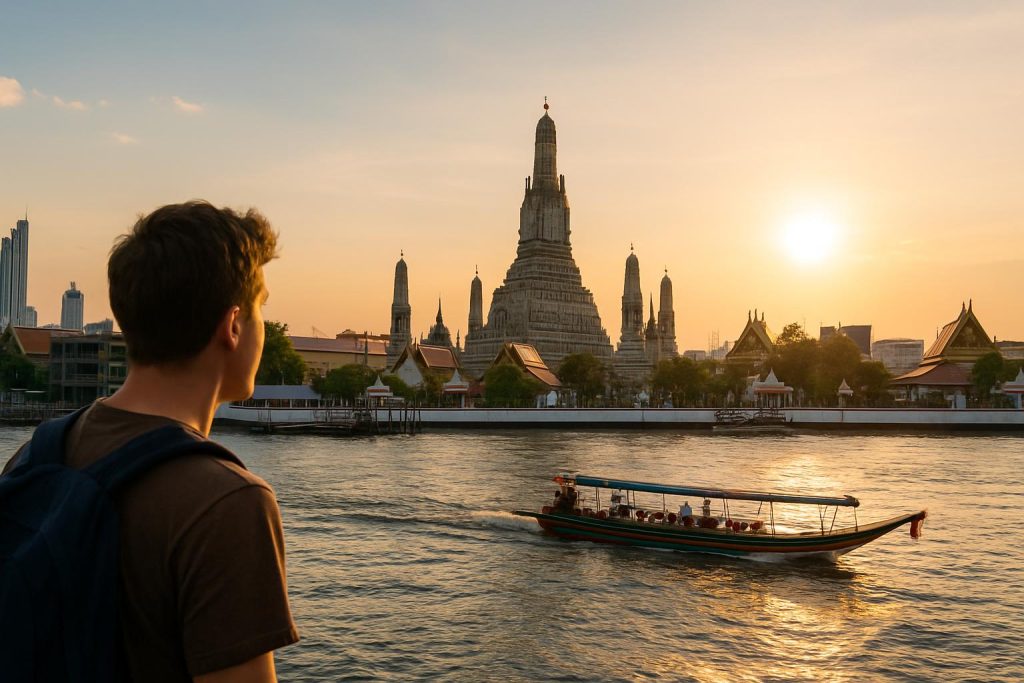
- A first-timer can cover accommodation, three street-food meals, local transport, and one temple visit in Bangkok for roughly $30–$40 per day in 2026.
- Bangkok BTS Green Line fares now run on a fully distance-based system, ranging from 17 THB to 65 THB per trip.
- Several prices and entry rules have quietly changed in 2026, and knowing them upfront is key to avoiding blown budgets and wasted days.
- This guide uses current, specific figures — dorm rates, temple tickets, train fares, and airport transfer costs — rather than outdated estimates.
Bangkok on a Budget in 2026: Why First-Timers Can Still Travel Well for Under $40 a Day
Bangkok remains one of the best-value big cities on the planet in 2026, and a first-timer can comfortably cover a bed, three street-food meals, transport, and one temple for roughly $30–$40 a day. The catch is that a few prices and rules have quietly shifted this year, and getting them wrong is what blows budgets and wastes precious days. This guide is built around the exact numbers you’ll actually pay — train fares, dorm beds, temple tickets, and airport transfers — so you can plan with real figures instead of guesses.
Two 2026 changes matter most. First, the city’s rail fares moved to a fully distance-based system: the Bangkok BTS Green Line fare is from 17 THB to 65 THB per trip, depending on the length of the journey (the max cap increased from 1 November 2025). Second, Thailand’s visa policy is in flux — the generous 60-day visa-free stay is being rolled back toward 30 days, which changes how long you can legally linger. Both are covered in detail below.
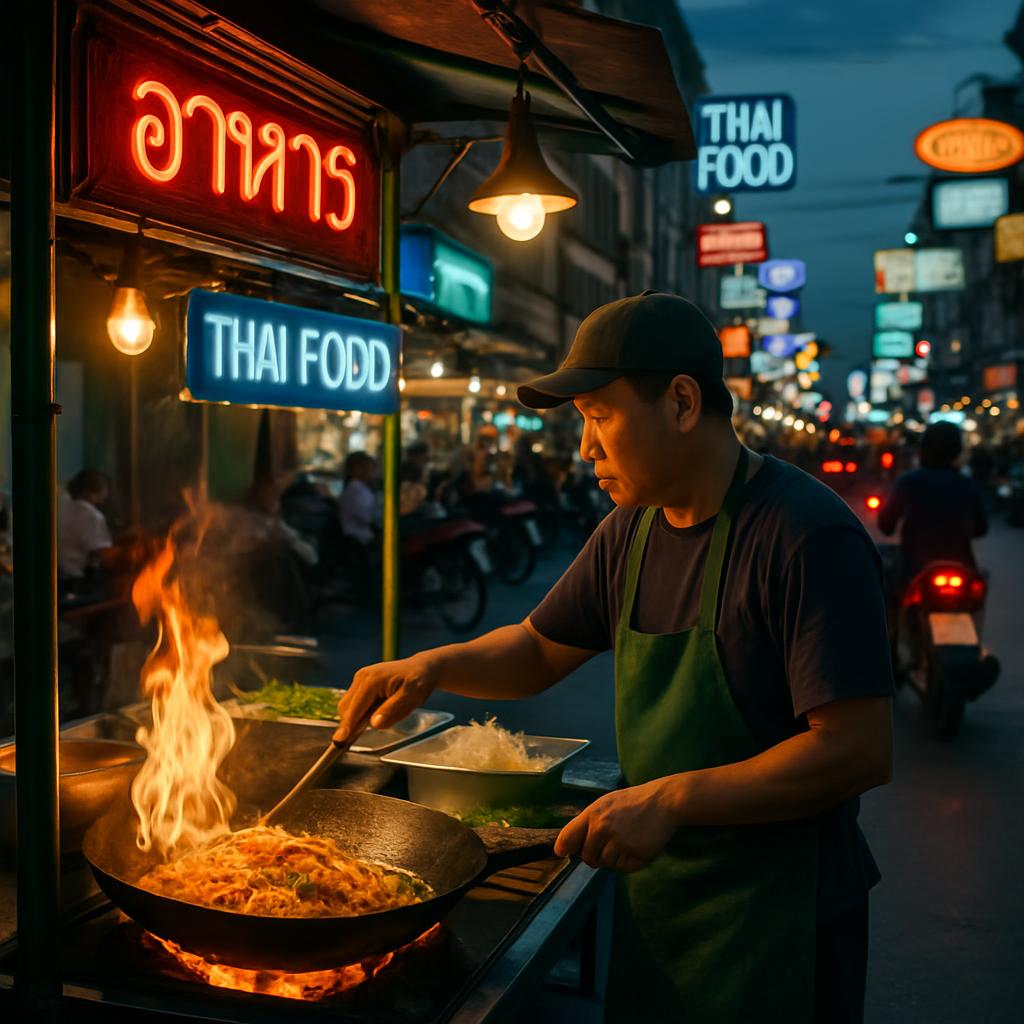
What hasn’t changed is the fundamental value proposition. Bangkok street food represents exceptional value with single dishes costing ₿40-80. Pad thai from cart vendors costs ₿50-60, while som tam (papaya salad) runs ₿40-50, and khao pad (fried rice) ranges ₿50-70. These meals provide authentic flavors and generous portions, making three daily street food meals total ₿150-240 – less than single restaurant meals in tourist areas. Pair that with cheap trains and clean dorms and you have a city built for budget travel.
What should first-timers look for in a Bangkok budget trip?
The four pillars of a cheap Bangkok trip are location, transport access, eating local, and entry rules — get these right and the rest falls into place. First-timers should prioritize a base near rail or the river, because Bangkok’s traffic is brutal and a poorly located cheap room costs you in taxi fares and lost hours. Everything else is secondary to those two factors: how you eat and how you move.
Location and neighborhood. Two areas dominate budget stays. Khao San Road and the surrounding Banglamphu/Rambuttri lanes are the classic backpacker base — walkable to the Grand Palace and the river, but with no nearby BTS or MRT station. Khao San Road – The OG backpacker street. Dive bars, street food, and travellers everywhere · Sukhumvit – Modern Bangkok. Sky trains, rooftop clubs, and international eats · Silom – Business by day, wild by night. If you value being on the rail network over being near the temples, a hostel near a BTS station in Sukhumvit or Silom is the smarter pick.
Eating and entry rules. Budget eating in Bangkok is genuinely a feature, not a sacrifice — street stalls and mall food courts both deliver. Food courts in shopping malls including MBK Center, Terminal 21, and Central World deliver air-conditioned dining with diverse Thai food options at ₿60-100 per dish. On entry rules, the single most important 2026 fact is that the visa-free window is being shortened. On May 19, 2026, the Thai Cabinet approved a rollback of the country’s visa exemption, cutting the visa-free stay from 60 days back to 30 for most nationalities, including travelers from the United States. Check your status before booking a long trip.
Which Bangkok neighborhood and transport setup is best for budget first-timers?
For most first-timers, the best-value setup is a dorm in or near Khao San for sightseeing access, combined with heavy use of the BTS/MRT and Chao Phraya river boats to move around. Bangkok’s rail and river network lets you skip the traffic almost entirely, and the fares are tiny compared with taxis. Below are the two decisions that shape your daily costs the most.
Where should I stay to save the most money?
Khao San and its quieter neighboring sois remain the cheapest concentration of beds in the city. 250–350 THB: Fan rooms or small dorms, shared bathrooms, AC windows limited or off-hours; bring earplugs and don’t expect a lounge. 350–600 THB: Standard dorms with real AC, privacy curtains, lockers, towel rentals for 20–50 THB, and a communal area you’ll actually use. 900–1,600 THB: Private rooms in hostel buildings; AC, en suite or shared bath, maybe a tiny balcony for drying laundry. Watch the hidden extras: Towel deposits (100–200 THB), keycard deposits (100–500 THB), late check-in fees after midnight (rare but read house rules), laundry by the kilo (40–60 THB/kg), and water refills (1–5 THB per 500 ml).
If you want quieter nights, the lanes just north and west of Khao San are the move. Khao San itself is party-forward and loud till late. Slide a few sois north toward Samsen or west to Phra Athit for quieter nights and river breezes. For couples who’ve outgrown dorms, simple private rooms in this zone still land in budget territory rather than hotel pricing.
How do I get from the airport into the city cheaply?
From Suvarnabhumi (BKK), the Airport Rail Link is by far the cheapest way in. A one way ticket for the Suvarnabhumi Airport Rail Link train is 45 Baht per person from the airport to Bangkok city centre. Specifically, Suvarnabhumi Airport – Makkasan (connection to MRT Blue Line): 35 THB · Suvarnabhumi Airport – Phaya Thai (connection to BTS Sukhumvit Line): 45 THB. The train avoids traffic entirely — the journey to Phaya Thai takes around 30 minutes, trains run frequently, and fares are inexpensive compared to taxis or private transfers.
Once in the city, lean on the rail and the river. Bangkok BTS Skytrain uses distance-based fares from ฿16–47. Operates 2 lines (Sukhumvit & Silom) with 62 stations. Rabbit Card is the standard smart card. For the subway, Bangkok MRT fare 2026 starts at 17 THB and can reach a maximum of 45 THB. Note Khao San has no rail station, so you’ll combine river boats from nearby piers with short walks or the occasional metered taxi.
What do real-world prices and traveler reviews show for 2026?
Real 2026 listings confirm that clean, air-conditioned dorm beds still start around $4–$8 a night, and that the city’s value reputation is intact. Hostelworld’s Bangkok hub advertises beds “from US$4.74”; prices start from $4 for a dorm bed. That’s the floor; mid-range social hostels with pods and rooftops sit higher but still cheap by global standards.
Reviewers consistently flag the same trade-off near Khao San: location versus noise. Well-run hostels solve it by sitting one lane back. One frequently praised property is described this way: Suneta Hostel Khaosan rounds out the under-$15 tier with a 2-star rating and an 8.7 review score. What sets Suneta apart is its location management — it is close enough to Khao San Road to walk there in minutes but set back enough that you can actually sleep at night. The practical lesson: pack earplugs and read recent reviews for the word “noise.”
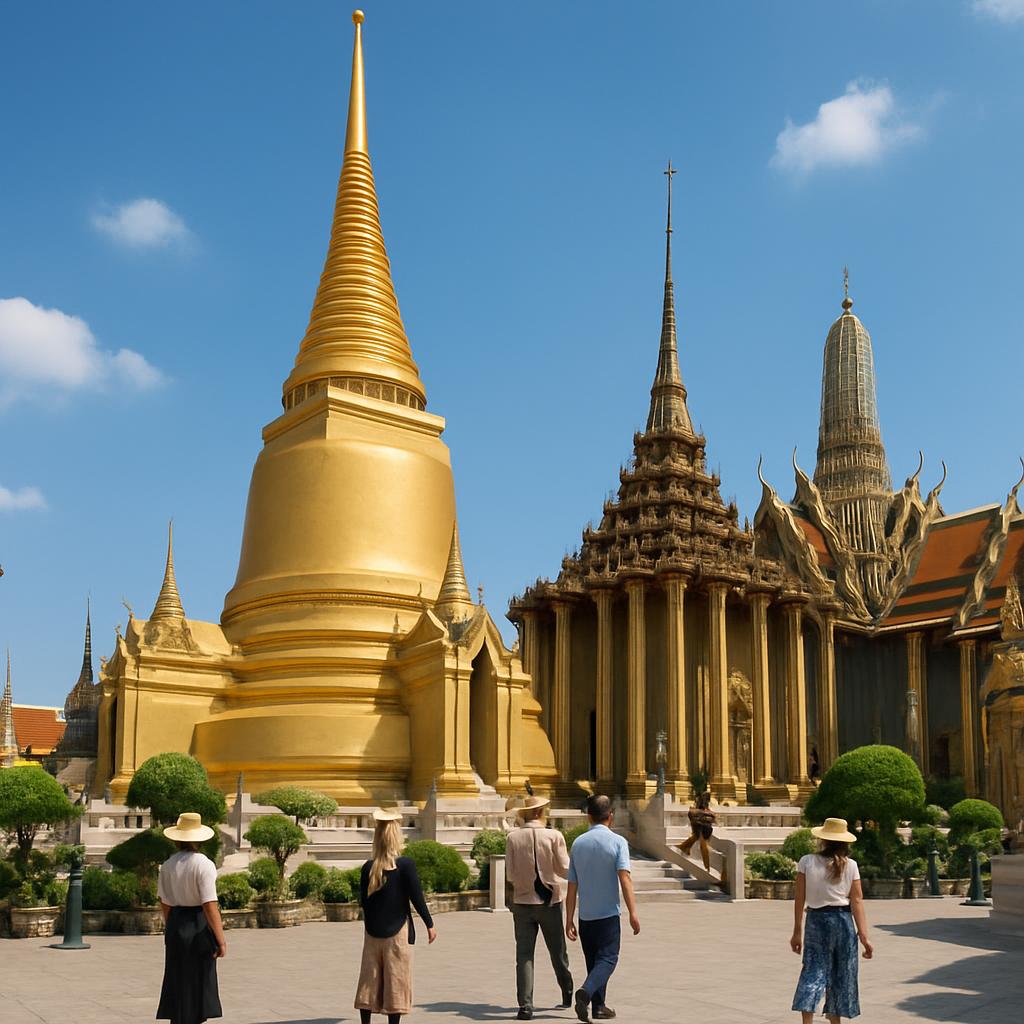
On attractions, the headline cost is the Grand Palace, and travelers confirm the official price holds in 2026. Foreign visitors pay 500 baht, Thai people enter free with ID, and children under 120 cm are free. Reviewers also warn about taxi scams at the exit and a strict dress code — the most important thing to know is that there is a dress code. It’s similar to when you visit Wat Pho or other royal temples. Basically, it means your shirts need sleeves and you can’t wear shorts. Bring a scarf or light trousers to avoid renting cover-ups.
How do Bangkok’s budget costs compare side by side?
Here’s a concrete 2026 cost breakdown so you can build a daily budget around verified figures. All prices are approximate and in Thai baht (THB); roughly 35 THB ≈ US$1 at the time of writing, so always re-check the live rate.
| Expense | Budget option (THB) | Mid-range option (THB) | Notes |
|---|---|---|---|
| Dorm bed / night | 250–350 (fan/basic) | 350–600 (AC, pods) | Private rooms 900–1,600 |
| Street-food meal | 40–80 per dish | 60–100 (mall food court) | ~150–240 for 3 street meals |
| BTS Skytrain trip | 17–65 (distance-based) | 1-Day Pass 150 | Rabbit Card = faster entry |
| MRT subway trip | 17–45 (Blue Line) | Up to 71 w/ Purple transfer | Separate ticket from BTS |
| Airport Rail Link (BKK→city) | 35 (Makkasan) / 45 (Phaya Thai) | 15–45 by distance | ~30 min, skips traffic |
| Grand Palace entry | 500 (foreigner) | +200 audio guide | Under 120 cm free |
| Wat Pho entry | 200 | — | Reclining Buddha |
| Visa extension (if needed) | ~1,900 | — | +30 days at Immigration |
Transport sources for the table: The standard price of the BTS SkyTrain One-Day Pass that allows you to use the Green Line all day long for a fixed price is 150 THB per day. On the MRT, if your journey requires a change between the Blue and Purple lines, currently MRT fare can go up to 71 THB. Wat Pho is confirmed at there is an entrance fee to visit Wat Pho. The fee is 200 Thai Baht per person. Read the official BTS fare page and the Grand Palace ticket page before you go.
How do you build and stick to a Bangkok budget? (Step-by-step checklist)
Build your budget bottom-up from a daily target of roughly 1,000–1,400 THB ($28–$40), then add one-off costs like temple tickets and the airport transfer. The trick is separating recurring daily spend (bed, food, local transport) from one-time spend (entries, visa, SIM) so a big sightseeing day doesn’t feel like overspending. Use this checklist in order.
- Step 1 — Check your visa tier first. The rules are mid-change. Tourists from 93 eligible countries still receive a 60-day visa exemption upon entering Thailand, but a rollback to 30 days is approved and the new rules take effect 15 days after publication in the Royal Gazette. No publication date has been announced. Until publication, the current 60-day exemption remains in force at the border.
- Step 2 — Complete the TDAC. Visa-exempt travelers must complete Thailand Digital Arrival Card (TDAC) within 72 hours before arrival. It’s free; do it before you fly.
- Step 3 — Book a hostel one lane back from Khao San (or near a BTS station) and budget 300–600 THB/night.
- Step 4 — Plan airport transfer as Airport Rail Link (35–45 THB) unless you land after midnight, when the line is closed and a Grab/taxi is the fallback.
- Step 5 — Allocate food at ~250 THB/day across three street or food-court meals plus water and snacks.
- Step 6 — Cap one-off sightseeing by bundling temples on the same day (Grand Palace + Wat Pho + Wat Arun are walkable/river-linked).
Common mistakes and the fix for each: Mistake — assuming BTS and MRT share one ticket; fix — they don’t, so budget separate fares or carry a Rabbit Card for the BTS lines. Mistake — taking the airport taxi in traffic; fix — take the rail link and connect to BTS/MRT. Mistake — wearing shorts to the Grand Palace and renting cover-ups; fix — just throwing some trousers in your day pack if you’re wearing shorts. Mistake — over-staying your visa window; fix — confirm your tier and, if needed, plan the +30 days at Immigration for THB 1,900 extension in advance.
One scam-avoidance note that protects your budget: near major temples, drivers waiting at exits push fixed “tour” prices and tuk-tuk gem-shop detours. A taxi might be the best choice for visitors – but be careful catching one when you leave, because the drivers that wait around the entrance will often try to scam you. Walk a block, use a metered taxi or a ride app, or take the river boat instead.
The Bottom Line: Bangkok Is Still a Bargain in 2026 — If You Plan Around the Changes
Bangkok in 2026 still delivers world-class temples, food, and energy on a shoestring, and a careful first-timer can run a full day — bed, meals, trains, and a temple — for around $30–$40. The two things that changed this year are the move to distance-based rail fares (a few baht more on longer trips) and the pending visa rollback from 60 to 30 days. Neither breaks the budget; both just require checking the current rule before you book.
If you remember only a few numbers, make them these: dorm beds from roughly 250–600 THB, street meals 40–80 THB each, BTS/MRT trips 17–65 THB, the airport rail link 35–45 THB, and the Grand Palace 500 THB. Build your daily spend around those, keep one-off costs separate, and you’ll have a clear, realistic budget rather than a hopeful guess. Bangkok delivers exceptional value relative to global cities, particularly compared to other Asian capitals. Daily costs run 40-60% below Singapore, Hong Kong, and Tokyo while providing comparable experiences.
Your practical next step: confirm your visa tier and complete the TDAC, lock a centrally located hostel for your first two nights, and screenshot the fare and ticket figures above to reference on the ground. Because visa and fare rules are actively shifting in 2026, treat every number here as a planning baseline and verify the live figure on the official sites before you pay. Note too that Thailand has proposed a tourism entry fee (approximately THB 300 for air travellers), but as of 2026 this has not yet been implemented — one more reason to recheck close to your travel date.
- Travel Insurance for Budget Backpackers in Southeast Asia: What You Need to Know
- Budget Travel in Japan 2026: Itinerary, Costs, and Hidden Gems Beyond Tokyo
- Bangkok Travel Guide: First Time Visitor Tips for 2026
- Visa-Free Travel in 2026: What’s Changed, What It Costs, and How to Avoid Getting Denied Boarding
Budget Gear Worth Packing for Bangkok
A few inexpensive items consistently earn their place in a Bangkok budget kit: a sturdy combination padlock for hostel lockers (most dorms expect you to bring your own), a lightweight scarf or packable trousers to meet temple dress codes without renting cover-ups, a refillable water bottle to use hostel refill stations, and a small contactless-friendly travel card sleeve for tapping through rail gates. None of these are big purchases, but each one removes a recurring small cost or hassle on the ground. If you’d like specific product picks, see the curated list below.
Frequently Asked Questions
Book Unforgettable Tours & Experiences
Skip the tourist traps. GetYourGuide connects you with top-rated local guides and hand-picked activities — with free cancellation on most bookings.
Disclosure: This post contains affiliate links. We may earn a commission at no extra cost to you.