
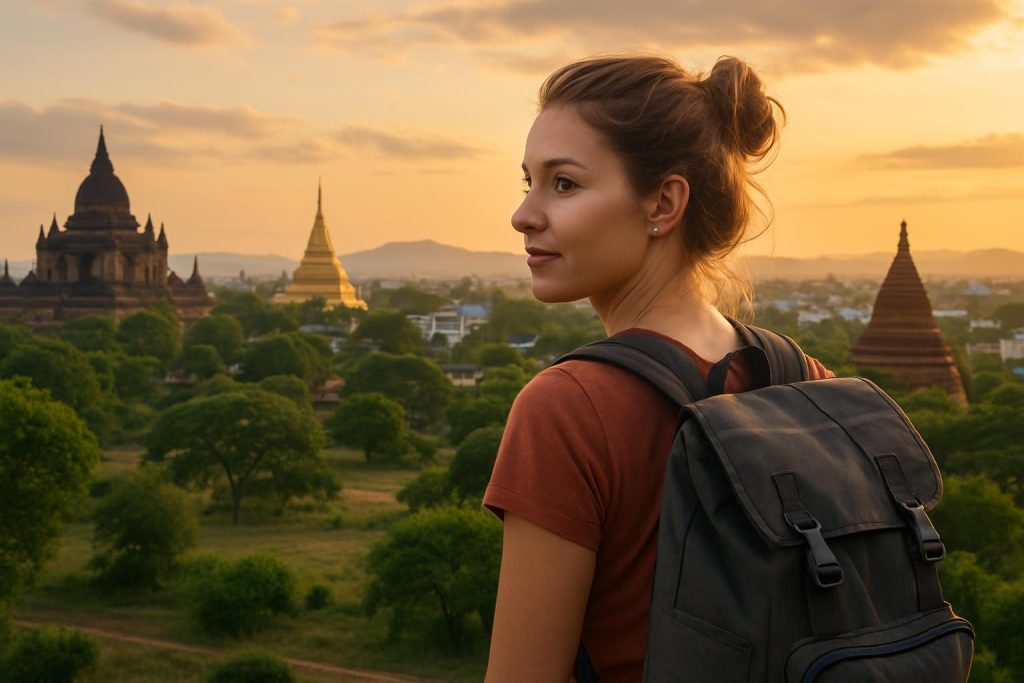
- Safety in Southeast Asia varies widely by country, with Singapore (8th) and Malaysia (12th) ranking far above Vietnam (41st), Laos (58th), and Indonesia (69th) on the 2026 Global Peace Index.
- Overall regional safety trends have improved in 2026, supported by better transport infrastructure and ride-hailing coverage.
- Real risk for solo female travelers depends less on the region as a whole and more on specific country, city, and neighborhood choices.
- Practical factors like accommodation choice, transportation method, and eSIM/connectivity access directly affect solo travel safety outcomes.
Solo Female Travel Safety in Southeast Asia: What the 2026 Numbers Actually Show
Solo female travel across Southeast Asia in 2026 is safer and more infrastructure-supported than at any point in the last decade, but the region is not uniformly safe — safety varies sharply by country, city, and even neighborhood. Asia has several strong performers in the 2026 Global Peace Index, with Singapore ranking 8th globally and Malaysia 12th, while Vietnam ranks 41st, Laos 58th, and Indonesia 69th. That spread matters more than a single “is Southeast Asia safe” headline, because a solo woman’s real risk profile depends on which country she’s in, how she gets around, and where she sleeps at night.
This guide is built around actual current cost data — hostel rates, ride-hailing fares, eSIM prices, and safety-gear costs — rather than generic reassurances. Recent survey data shows that self-defense devices were carried by 18% of solo female travelers in 2025, while travel insurance was consistently purchased by 57%, and hostel reviews were carefully read by 28% of travelers before booking. That tells us solo female travelers are already budgeting time and money for safety — this article shows you exactly how much that costs and where to spend it.
The goal here isn’t to scare you or oversell confidence. It’s to give you a researched, numbers-first framework: what a safety-conscious daily budget looks like, which transport options are worth the extra dollar, and how to choose accommodation that reduces — not eliminates — risk. Southeast Asia remains one of the most rewarding regions in the world for a first solo trip, provided you plan the logistics with the same rigor you’d apply anywhere else.
What Actually Drives Safety Risk for Solo Women in the Region?
The biggest safety variables are transport choice at night, accommodation type, and country-level infrastructure — not “how solo you look.” Booking habits reflect a strong focus on security, with walking alone at night being avoided by 25% of travelers, location data being shared with trusted contacts by 23%, and same-sex dorms or properties with integrated security features being booked by 18%. These are the practical levers you actually control, and they cost money — which is why they belong in a budget breakdown rather than a vague tips list.
Country selection is the first and biggest lever. Malaysia, Thailand, Indonesia, and the Philippines have generally been considered safe, but instances of sexual violence against lone female travelers have occurred, most often in isolated places near holiday resorts or off the beaten track rather than in city centers. This pattern — risk concentrated in isolated or under-lit areas rather than cities themselves — is echoed across most credible solo-female-travel research and should shape where you choose to stay, not just which country you fly into.
Accommodation quality is the second lever, and it’s directly priced. Safety and security are non-negotiable when choosing hostels: good properties offer individual lockers, many have 24/7 reception and key card access, and female-only dorms are increasingly common and a fantastic option for solo women travelers seeking extra peace of mind. Paying $3–8 more per night for a hostel with a female dorm and 24-hour reception is one of the highest-value safety purchases you can make in the region.
The third lever is connectivity — having working data the moment you land, before you’ve even found a taxi. Many mobile operators still charge as much as $3 USD per MB for data roaming, meaning simply opening Instagram could cost $60 USD, so eSIMs remain the easiest way to avoid high roaming charges in 2026. Arriving with a working eSIM already active means you can call a verified ride-hailing car instead of negotiating with an unmetered taxi driver in an unfamiliar language — a small cost that buys real safety margin.
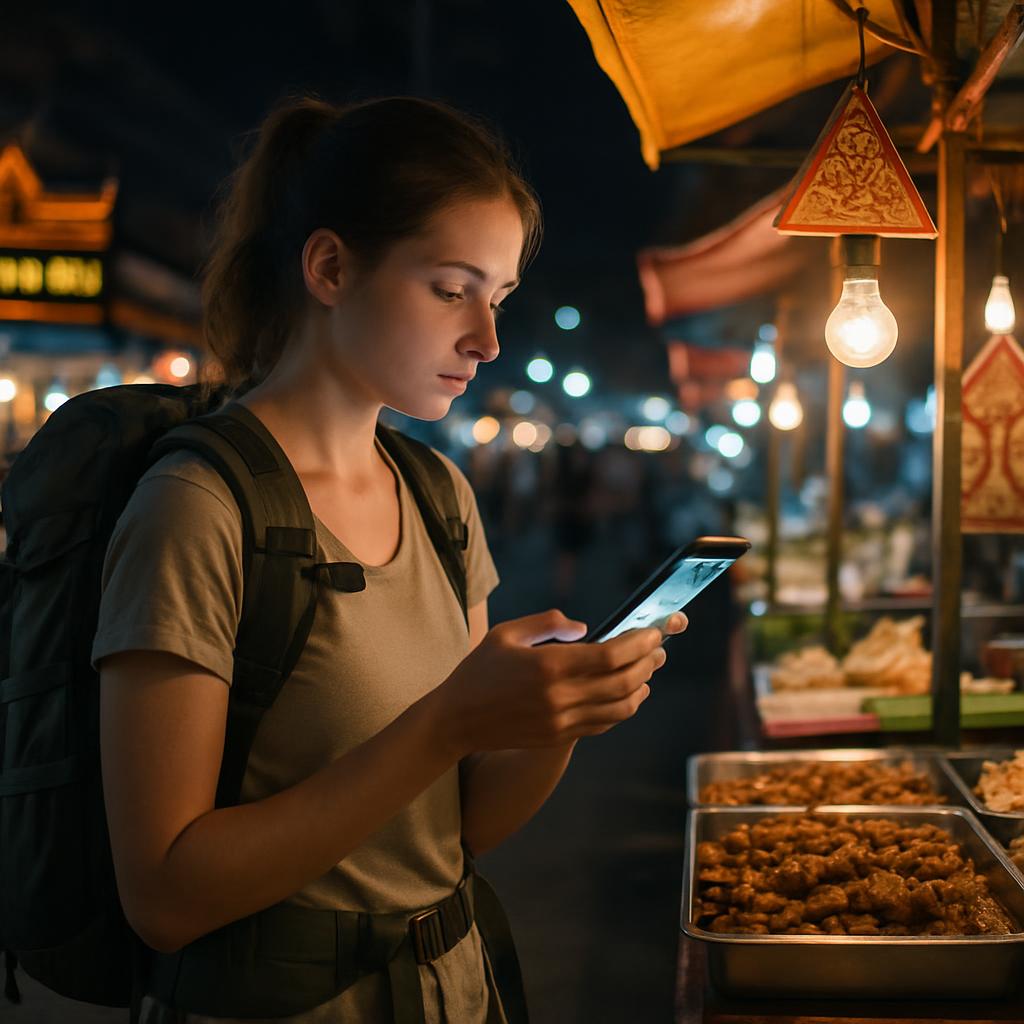
Daily Safety-Adjusted Cost Breakdown: Thailand, Vietnam & the Philippines
A realistic solo female safety budget in Southeast Asia runs roughly $35–90 per day once you factor in female-dorm premiums, ride-hailing over public transport at night, and a working eSIM — higher than a generic backpacker budget, but still very affordable by global standards. The table below isolates the specific safety-relevant line items rather than a generic cost-of-living breakdown.
| Cost Item | Local Price | USD Equivalent | Safety Note |
|---|---|---|---|
| Female-only hostel dorm bed (Thailand/Vietnam) | ~250–800 THB | $8–25 | Dorm beds region-wide run $8–25/night; pay the top of the range for female-only + lockers |
| Grab/Bolt car ride, short city trip | ~60–120 THB | $2–4 | Upfront pricing, GPS-tracked driver details, cashless payment |
| Official Chiang Mai airport taxi/Grab | 150–200 THB | $5–8 | Worth it over shuttle bus for late-night arrivals |
| Regional Southeast Asia eSIM (10 countries, ~30 days) | n/a | ~$2.19/day (Simify), $9.50–34 for 10-day plans | Activate before landing so maps/ride apps work immediately |
| Full night market meal (Taipei benchmark) | n/a | $3–7 | Stick to busy, well-lit stalls after dark |
| Scooter rental/day (Chiang Mai) | 150–350 THB | $5–10 | Helmet mandatory by law since June 2025; fines up to 2,000 THB for non-compliance |
| Travel/medical insurance (per day, annualized) | n/a | ~$1.50–3 | Purchased by 57% of solo female travelers surveyed in 2025 |
How we calculated: Hostel and food figures verified via Destination Wanderer’s Southeast Asia hostel guide and TravelValueFinder’s 2026 solo travel cost data; transport fares verified via Trip.com’s Chiang Mai transport guide and official Grab Thailand listings; eSIM pricing verified via Traveltomtom’s Thailand eSIM comparison, July 2026; helmet law verified via 2025–2026 Thai enforcement reporting. All figures approximate and subject to exchange rate fluctuation.
Which Countries Should a First-Time Solo Woman Actually Choose?
For a first solo Southeast Asia trip, Vietnam and Thailand offer the best combination of affordability, established solo-traveler infrastructure, and safety track record — with Taiwan and Singapore as lower-stimulation “training wheels” options just outside the mainland region. Hanoi, Hoi An, and Da Nang are consistently cited in solo female travel communities as Vietnam’s most accessible cities for women traveling alone, with Hoi An’s walkable UNESCO Ancient Town and relaxed café culture particularly well-suited, at a budget of roughly $45–80/day all-in.
Thailand remains the classic entry point for good reason. Thailand has long been considered one of the world’s best backpacker destinations, where a traveler can craft a personalized itinerary within their budget, whether looking for affordable luxury, cultural experiences, or a party-focused trip. Chiang Mai in particular has become a hub specifically built around solo female infrastructure: Chiang Mai is highlighted as the recommended Southeast Asia entry hub for solo female travelers, with a long-term residency option available via the Destination Thailand Visa and safety risks mitigated by the city’s network of vetted co-living spaces.
Where caution should rise rather than fall is in frontier destinations and specific enclave towns. Localized safety hazards exist in some backpacker hubs — in late 2024, several fatalities from methanol poisoning linked to unvetted, homemade alcohol served in local hostels were recorded in Vang Vieng, Laos, and travelers are advised to avoid unsealed liquor bottles and informal local spirits. This is a concrete, documented risk that generic “trust your gut” advice won’t surface — it’s a specific behavior (drink only sealed, brand-name alcohol) that measurably reduces risk in that specific location.
Scenario-Based Daily Budgets by Travel Style
Your safety-adjusted daily budget should scale with how much convenience and buffer you want, not just how much you can technically survive on. The table below breaks down three common solo female traveler profiles using the cost data above.
| Traveler Profile | Daily Budget (USD) | What’s Included |
|---|---|---|
| Bare-bones backpacker | $28–35/day | Mixed dorm bed ($8), street food x3 ($6), local transport/songthaew ($3), eSIM allocation ($2), occasional Grab at night ($4), contingency ($5–10) |
| Safety-conscious mid-range | $50–65/day | Female-only dorm or budget private room ($20–25), mixed street food/café meals ($12), daily Grab rides ($8), eSIM ($2), insurance ($2), buffer ($6–16) |
| Comfort-first solo traveler | $75–110/day | Private ensuite room ($45–75), restaurant meals ($15), Grab everywhere including nights ($12), eSIM unlimited ($2), insurance ($3), activities buffer ($10–20) |
How we calculated: Ranges built from Taiwan/Vietnam mid-range benchmarks of $45–110/day via TravelValueFinder’s 2026 destination data, cross-referenced with hostel and transport figures above. Verified July 2026.
Building Your Actual Safety Toolkit and Booking Checklist
The most effective safety toolkit for Southeast Asia in 2026 is inexpensive and mostly digital: an active eSIM before landing, offline maps, shared location tracking, and pre-vetted first-night accommodation. This is the practical, step-by-step sequence worth following before and during the trip.
- Before departure: Buy and activate a regional eSIM so data works the second you land — providers like Airalo’s Asialink plan cover 18 countries across Asia including Cambodia, Indonesia, Laos, Malaysia, Philippines, Singapore, Thailand, and Vietnam, letting you skip the airport SIM kiosk entirely.
- Book your first night with a transfer included. Booking your first night with airport transfer included matters because arriving in a new country without a clear plan for the airport-to-hotel leg is the highest-risk moment of any solo trip.
- Share your itinerary in writing. Email or text your accommodation address, flight details, and rough daily plan to a trusted contact — not just a verbal mention, an actual saved record they can reference if needed.
- Set up phone emergency features. Configure Medical ID (iPhone) or Emergency Information (Android) and download offline Google Maps for each city before you lose signal.
- Choose female-only dorms or vetted co-living where available — increasingly standard in hostels and purpose-built in hubs like Chiang Mai.
- Default to ride-hailing apps after dark instead of flagged taxis or unmarked tuk-tuks, since apps provide upfront pricing, GPS tracking, and driver identification.
- Carry a basic personal alarm and a portable door lock for budget accommodation with older lock hardware — both are inexpensive, packable, and commonly recommended in solo female travel gear roundups.
Common Mistakes First-Time Solo Travelers Make — and the Fix
Most safety incidents involving solo female travelers in Southeast Asia trace back to a handful of avoidable decisions rather than bad luck. Below are the recurring mistakes and their concrete fixes.
Mistake: Renting a scooter without checking the current helmet law. Thailand intensified enforcement of its motorcycle helmet regulations starting June 1, 2025, requiring both riders and passengers to wear approved helmets or face fines up to 2,000 THB. Fix: always request and wear a certified helmet, even for a two-minute ride, and confirm your rental includes one that isn’t visibly damaged.
Mistake: Drinking unsealed or informal local spirits in backpacker enclaves. Fix: travelers are advised to avoid unsealed liquor bottles and informal local spirits — buy sealed, brand-name alcohol only, particularly in towns like Vang Vieng where this has been a documented, fatal risk.
Mistake: Booking the cheapest hostel without checking security features. Fix: filter listings specifically for lockers, 24/7 reception, and female-only dorm options before comparing price — the $5–10/night difference is the actual safety margin, not a luxury upgrade.
How Do Costs and Risk Shift by Season and Region?
Prices and crowd density — both of which affect solo female safety — shift meaningfully by season, with shoulder-season travel often offering the best safety-to-cost ratio. High season (roughly November–February in mainland Southeast Asia) brings more crowded, better-lit tourist zones but higher accommodation prices, while low season/rainy season can mean emptier hostels, fewer other travelers to socialize with, and sometimes reduced staff coverage at smaller guesthouses.
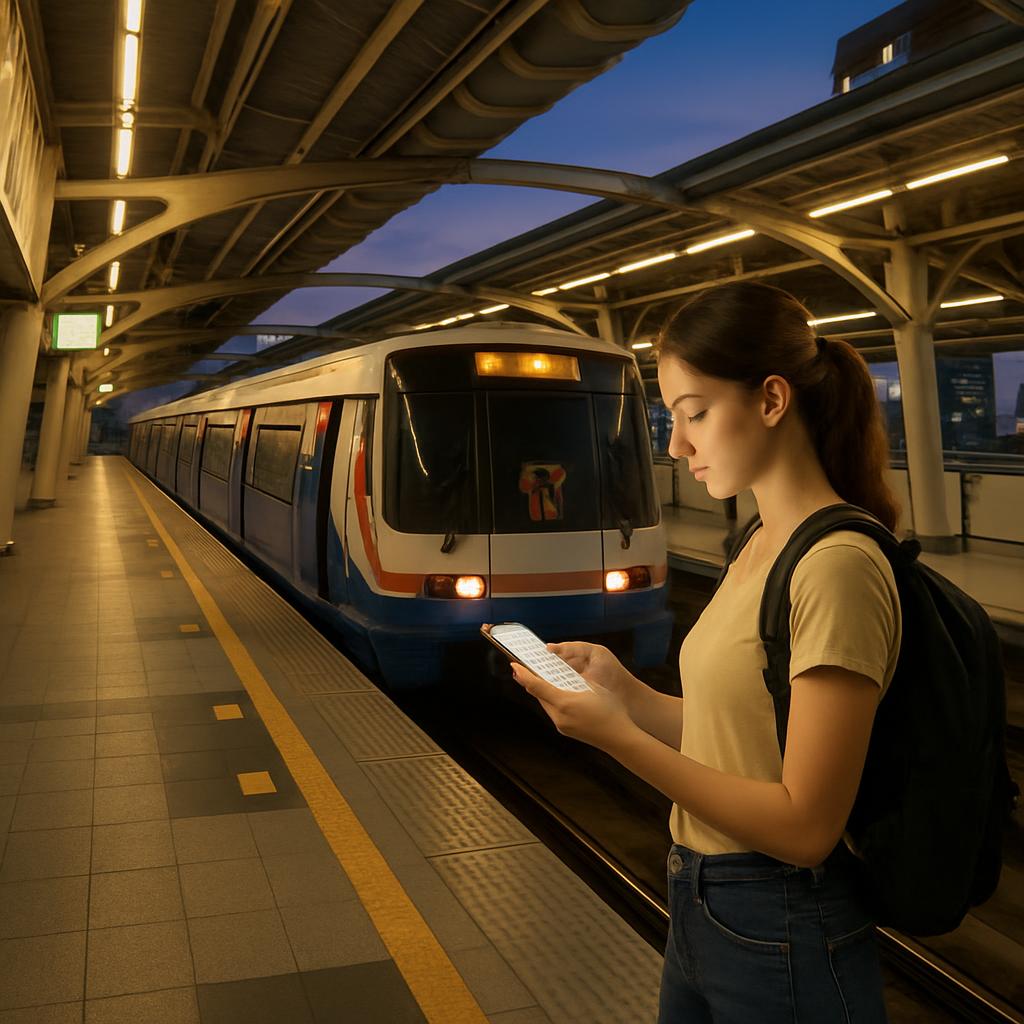
Neighborhood choice within a single city can matter as much as season. In Bangkok, staying near BTS Skytrain or MRT lines keeps you within a short, well-lit walk of 24-hour convenience stores and transit rather than relying on unlit sois (side streets) late at night. Thailand has excellent public transport, including the BTS Skytrain and MRT in Bangkok, along with local buses and ferries — proximity to these lines is a safety feature worth paying a little more in accommodation to secure.
Rural and frontier regions carry a distinct risk profile that’s more about health and road safety than crime. Municipal tap water is non-potable across Laos, rural areas carry a risk of vector-borne illnesses requiring malaria prophylaxis, and motorcycle accidents represent the highest category of medical claims for foreign travelers in the region. Budgeting for bottled water, appropriate vaccinations or prophylaxis, and comprehensive travel insurance becomes more important, not less, the further you get from major tourist circuits.
Practical Gear and Apps Worth the Small Investment
A short list of low-cost tools consistently shows up across solo female travel safety research for the region, and each has a specific, checkable price point rather than being a vague “just be prepared” suggestion.
Personal alarms — small, keychain-sized devices that emit a loud siren when triggered — are cheap, widely available online, and commonly recommended for late-night arrivals or walks down unfamiliar streets. Combined with a portable door lock or door wedge alarm for older guesthouse rooms, these two items typically cost under $20 total and pack into a daypack without adding meaningful weight.
Location-sharing apps like Life360 or simply sharing live location via WhatsApp or Google Maps with a trusted contact cost nothing and provide a real-time safety net that many solo travelers underuse. Pairing this with offline maps (downloaded before you lose signal) means you’re never fully disconnected, even in areas with patchy coverage.
Frequently Asked Questions
Book Unforgettable Tours & Experiences
Skip the tourist traps. GetYourGuide connects you with top-rated local guides and hand-picked activities — with free cancellation on most bookings.
For connectivity specifically, comparing a regional multi-country eSIM against single-country options is worth the five minutes it takes. The DTAC Happy Tourist eSIM offers unlimited data for around $9.90 USD for 10 days in Thailand and includes a Thai phone number for calls and SMS — useful if Thailand is your sole destination, whereas a regional eSIM makes more sense if you’re crossing multiple borders in one trip.
The Bottom Line: Matching Your Budget to Your Risk Tolerance
Solo female travel in Southeast Asia in 2026 is genuinely accessible at almost any budget level, but the safety-relevant spending — accommodation security features, reliable transport, working connectivity, and insurance — should be treated as non-negotiable line items, not optional upgrades. If your total daily budget is under $35, prioritize female-only dorms over private rooms and lean on ride-hailing apps only for late-night trips, walking or using public transit during daylight to stretch your funds further.
If your budget sits in the $50–65/day range, you can comfortably combine a female-only dorm or budget private room with daily Grab or Bolt rides, a regional eSIM active from arrival, and basic travel insurance — this is the sweet spot most solo-female-travel research points to as balancing cost and practical safety. If you’re spending $75–110/day or more, that buffer lets you book verified transfers for every arrival, stay in higher-security private accommodation, and avoid time pressure that sometimes pushes travelers into riskier shortcuts, like walking alone late at night to save a $3 ride fare.
Regardless of budget tier, the highest-leverage decisions remain the same: choose your first destination based on established solo-female infrastructure (Vietnam, Thailand, and Taiwan/Singapore as gateways score consistently well), book your first night with a transfer included, keep a working eSIM active from touchdown, and treat accommodation security features as a real cost worth paying for — not a line item to cut.
Disclosure: This post contains affiliate links. We may earn a commission at no extra cost to you.